Working together
Hiring a freelance software developer in Nigeria: how to scope the project
A buyer’s checklist for hiring a freelance software developer in Nigeria: React, backend or full-stack scope, milestones, acceptance criteria and handover.
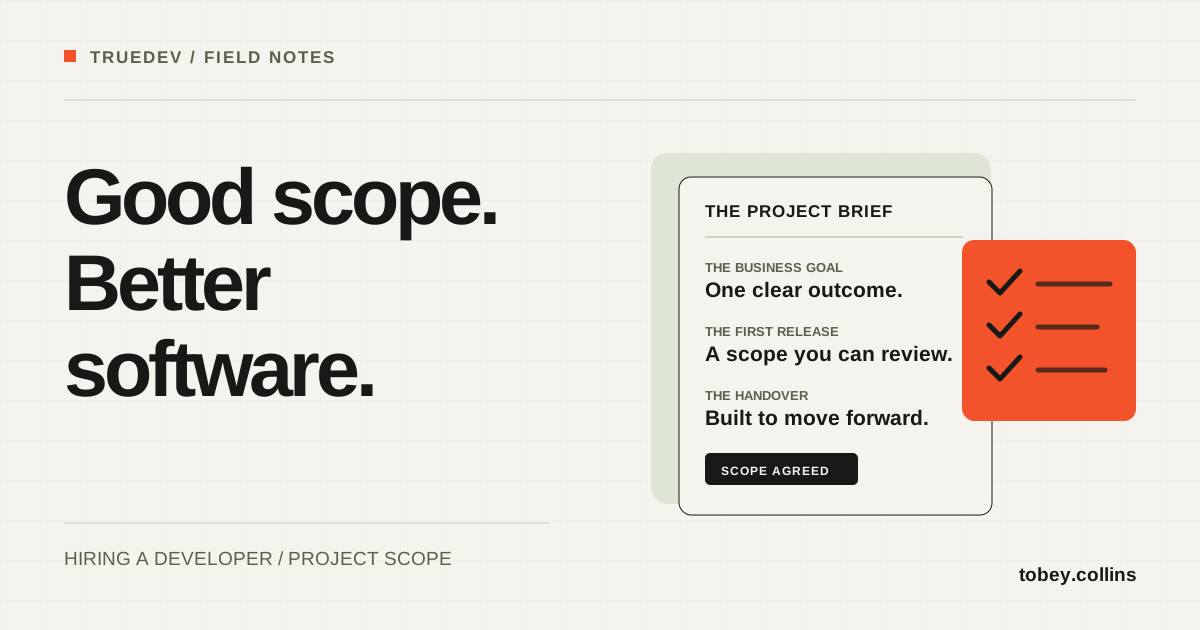
A clear scope makes a proposal easier to trust
When hiring a freelance software developer in Nigeria, define the business problem, the people using the product and the evidence that will show the work is complete. Then compare relevant project experience, communication, delivery milestones and ownership terms. React, Flutter or AWS may support the build, but a list of technologies does not describe the outcome you are buying.
Your first brief can be short. Describe the current process, the friction it creates and the outcome you want. For example: customers currently send booking requests in separate messages, and the team needs one place to review availability and confirm requests. That gives a contractor something concrete to investigate and estimate.
Describe users and complete journeys
List the different people who will use the system and what each person is allowed to do. A customer, staff member and administrator may need different screens, permissions and notifications. This is more useful than a single requirement labelled dashboard, which can hide several separate workflows.
Write the important journeys from start to finish. For a booking product, explain how a request is created, who reviews it, what a customer receives and how cancellation works. Include awkward cases: unavailable dates, incomplete information and interrupted payments. You do not need every answer immediately, but identifying open questions helps the contractor distinguish known work from assumptions.
Do you need a frontend, backend or full-stack developer?
A frontend developer builds the interface people use: pages, forms, application screens and the states around loading, success and failure. A React developer may be a good fit for an interactive web interface. A backend developer works on server-side behaviour such as data, permissions, business rules and integrations. A full-stack engagement spans both, with explicit responsibility for how they connect.
For example, a new dashboard may require a frontend specialist if the API is already documented and reliable. A booking system with no existing backend needs wider delivery responsibilities. Whether you search for a freelance React developer in Lagos or a full-stack web developer in Nigeria, explain what already exists and what the contractor will own. Ask to see work relevant to that scope.
Turn features into acceptance criteria
Acceptance criteria describe behaviour you can inspect. Instead of saying contact form, specify the required fields, validation, message destination and confirmation shown to the visitor. State what happens when delivery fails. Instead of saying user accounts, identify registration, sign-in, password recovery and the permissions each role needs.
Separate the first release from useful later additions. A searchable catalogue may be essential; saved favourites may be optional. Give each important feature a clear completion condition and a reviewer. This creates a shared basis for demonstrations and reduces the chance that two people interpret the same short feature name differently.
Include quality requirements and operational work
Specify target devices, supported browsers, accessibility expectations and the journeys that must perform well. Ask how these will be checked. W3C's accessibility evaluation guidance recommends review throughout development and explains why automated tools alone are insufficient. A practical review should include people using the interface, keyboard navigation and form feedback.
Discuss the information the product stores, who can access it and how failures will be noticed. Security belongs in design and delivery decisions; the NIST Secure Software Development Framework provides a reference for integrating security practices into development. Agree responsibilities for backups, updates and incident handling in proportion to your product's needs.
Use milestones that show working progress
A milestone should produce something you can review: a confirmed scope, an approved interface, a working customer journey or a release candidate. Ask what you will see at each checkpoint, how feedback will be recorded and who can approve the next step. Regular demonstrations help uncover misunderstandings while decisions are still easier to adjust.
Record dependencies alongside the schedule. A developer may need product copy, existing data, payment-provider access or approval from your internal team. Identify who supplies each item and by when. For new requests, ask for a short explanation of the effect on effort, schedule and existing priorities before deciding whether to include them.
Make handover and support concrete
Before work begins, confirm the expected access to source code, hosting, domains and third-party services. Ask which accounts your business should control and what documentation you will receive. These details make future maintenance easier and help another developer understand the system if the team changes.
Distinguish the agreed process for correcting defects from ongoing enhancements. Define how to report a problem, what information is needed and what support window applies. A handover should explain deployment, environment configuration, routine administration and known limitations without exposing secrets in ordinary documents. Confirm how access will be transferred securely.
I offer web application development alongside business websites and Flutter apps. A useful first conversation covers the workflow, your existing systems and the decisions that need testing before a larger commitment.
- The business problem, intended users and success criteria.
- First-release journeys, permissions and acceptance criteria.
- Content, integrations, data and delivery dependencies.
- Review milestones and a process for scope changes.
- Account access, documentation, handover and support responsibilities.
What if you do not have a complete specification?
Bring what you know and mark what is uncertain. Screenshots, spreadsheets, customer questions and a walkthrough of your current process can be useful starting material. A focused discovery stage can turn that evidence into a proposed scope, technical approach and delivery plan before the larger build is committed.
When I discuss a project, I want to understand the business outcome and the constraints behind it. Share the problem, your deadline and the people involved. We can shape a practical first release and agree how you will review the work as it develops.
Can a freelance developer work remotely with a team in Abuja?
Yes, when the engagement has a workable review process. Agree a shared record of the scope, a named decision-maker, scheduled demonstrations and the accounts used for code and deployment. State any need for in-person work at the beginning. A city keyword alone does not tell you how the developer will communicate or whether the arrangement fits your team.
What should you send before requesting a quote?
Send the business goal, main users, three to five important journeys, links or screenshots of the current process, required integrations and any deadline or budget limits. Mark unknowns clearly. If a requirement affects cost or feasibility, ask for a discovery task or prototype before treating it as a fixed-price assumption.
FURTHER READING / PRIMARY SOURCES